Showing posts with label Smartphones. Show all posts

Thursday, September 3, 2015

"Pick Your Choose"

Like the title? It's "make a choice" in local parlance. *insert laugh* Now, to the meat of the gist.

Do you ever feel inundated by the avalanche of shiny new avant garde smartphones that seem to lure you with one charming feature or the other? Even though you've only just bought that brand-new smartphone you've been eyeing for longer than you can remember? Yea. No bi only you. We plenty. It's the consequence of mobile tech that's jumping forward here and there without giving people much time to relax and enjoy their tear-rubber devices before a new slew of products hit the stands.

Sorry.

What to do? The idea is to decide what feature one wants and prefers, then go buy the device that has the best or one of the best of that feature (or features). If you do that, you'd remain pleased no matter what other devices come out with other tempting and mouthwatering features that aren't suited to your preference (no matter how glittery those other tempting new features are).

I, for instance decided on a huge battery as my preference and at a diminutive pocket friendly price. And that's what I got. Plus fast-charging thrown into the mix as a bonus. So, I see other devices and admire them from a distance without hating on my device cos I'm happy with what I got. Every once in a while I see people outside with power packs, I see people afraid to use their devices for long periods so as to conserve battery, I see some going out with extra batteries so that they can swap when one packs up on them while they're outside and far from a charging port, I see those whose phones have died as a result of exhausted batteries, I see all sorts. And these are the biggest phones around (compared to my Chinco phone). Galaxies, iPhones, Xperias, LGs, name them.

What use is a top smartphone when it's dying of battery shortage, or worse, when it's dead at a time you need it most? So, while others are saving battery, swapping battery, managing battery, helping battery with power banks, I'm out there with them playing games, browsing, watching videos and throwing everything I can at my phone and the battery is keeping up.

After a full day of wicked usage, I still get home with 20% left which, if I don't plug overnight, can still take me to at least midday the next day. The best part? With 20 mins plug-in, that 20% jumps to 70. And I can take that out for another full day.

So, you can see what I mean. I'm a power user and I need to have a device that suits that usage (without tearing a bleeding hole in my small pockets). Yes, I sometimes have to deal with perceptive software lags here and the but that is my preference and whatever else I see doesn't attract me because it doesn't fit that bill. I might admire it and love the tech, but I have my choices and I stick with them.

What are yours? Find out. Pick the device that suits those preferences and at a price range you can comfortably afford. Then, smile at these nouveau attractive products being churned out at an alarming pace. But without the urge to splurge on them. It's one of the many advantages of the Android ecosystem. And the current competition in mobile technology with Windows and BlackBerry all providing offerings that keep us from going bankrupt with Apple.

Wednesday, July 29, 2015

Flagship Killer Alert!

The flagship killers are coming.

If you don't know what "flagships" are when talking about smartphones and their manufacturers and you have no idea how they can be "killed" and are strangely pondering what the term "flagship killer" could possibly imply, do us both a huge favour. Stop reading. Yes, at this point. Just stop.

If you stubbornly persisted though, flagship killers, as a concept, grew from an earlier development of a batch of smartphones that were expected to put to an end to the blazing market lead the revolutionary Apple iPhone had. At that point, they were tagged "iPhone Killers". They ended up being anything but. The iPhone had the first mover advantage, had patented most of the smartphone design language and predominated mobile tech. It was, in fact, in a class all by itself.

Most of that advantage would peter off with the stepping up of a worthy challenger in the Android ecosystem: Samsung. Shedding it's mediocre beginning and entering a long term project of smartphone-market domination, it aped the iPhone dress sense, cloned some of Apple's user experience and encased Android with their in-house interface called TouchWiz. Then, they sold it cheaper than Apple's offerings. Those who wanted an alternative with more openness than the iPhone had found one.

Android rode on this popularity to gain traction in the battle for supremacy in mobile tech. Apple wasn't about to let that happen without a fight. Litigations after litigations brought the duels to the courthouses. To survive, Original Equipment Manufacturers (OEMs) of Android devices were forced to differentiate themselves, in hardware and software, from everything Apple.

As always, Samsung led that drive. It increased its screen sizes and threw into its flagships all sorts of bells and whistles it felt would sway buyers its way. From sensors that tracked eyeballs to keep the screen awake while the eyes remained on it to heart-rate monitors, whatever they could think of, they jammed into devices that were constantly increasing in size. Then, they became the "Toyota" of smartphones, furnishing buyers with smartphones for all pocket sizes.

Samsung had come of age. It had become an OEM with a flagship that others had to battle. That others had to kill. The Android competition took notice. And borrowing pages from Samsung's playbook, began to develop "flagship killers" to dethrone flagships from Samsung and from Apple.

It wasn't long before the world then added the word "phablet" to it's lexicon as a result. It referred to smartphones that were too big to be called phones but not big enough to be called tablets. These devices were between a "phone" and a "tablet" hence the new classification "phablet".

The buyer-hunger for ever bigger screens was an eye opener for OEMs. Apple however resisted the urge claiming a lot of thought and research for one-handed use of touchscreen phones went into its decision to use the screen size it preferred. Larger phones made the iPhone appear toyish but Apple was obdurate.

The battle raged on. Samsung giving Apple a run for its money. BlackBerry slowly dying. Windows phones looking like relics. The dregs left for the others to contend with.

Phone components became more available and affordable. The tech finally caught up and hardware improved enough to match the processing demands of the software. With its Open Source model, Android grew in leaps and bounds and in some instances overtook Apple in functionality. Apple made do with consistency and premium quality but there came to be a plateauing of growth in what could be offered. It got to the point where the competition was just how to better, in slight incremental proportions, what was already on offer.

Concurrently, Android's conditional free OS allowed inexpensive but less-powered devices from Asian OEMs to flood the middle- and lower-income earning market. Those poorly executed products conspired to give the platform a bad reputation with many concluding that Android as a whole was a terrible OS to be involved with. Among other considerations, this led Google to place emphasis on standards and engineer Android to work as efficiently on the less-powered as it did with flagships.

What that move birthed was phenomenal especially considering the need for low-priced but efficiently functional devices in many areas around the world, third-world countries inclusive. It triggered the possibility of smartphones priced at under-$50. Coupled with component-availability and affordability, it appeared the days where only the flagship assured of quality and efficiency but at high, out-of-normal-reach premium were numbered.

It appeared. At the time.

Today however, two devices have "appeared" with enough gravitas to stake their holding to that promise. I will allow readers read of the two devices, their quality (which ooze from every pore), the premium-ness, their functionalities, the possibility of personally customising both, their specs, their differentiations but more than anything else their unbelievable affordability for all the mobile-tech punch they pack.

These two
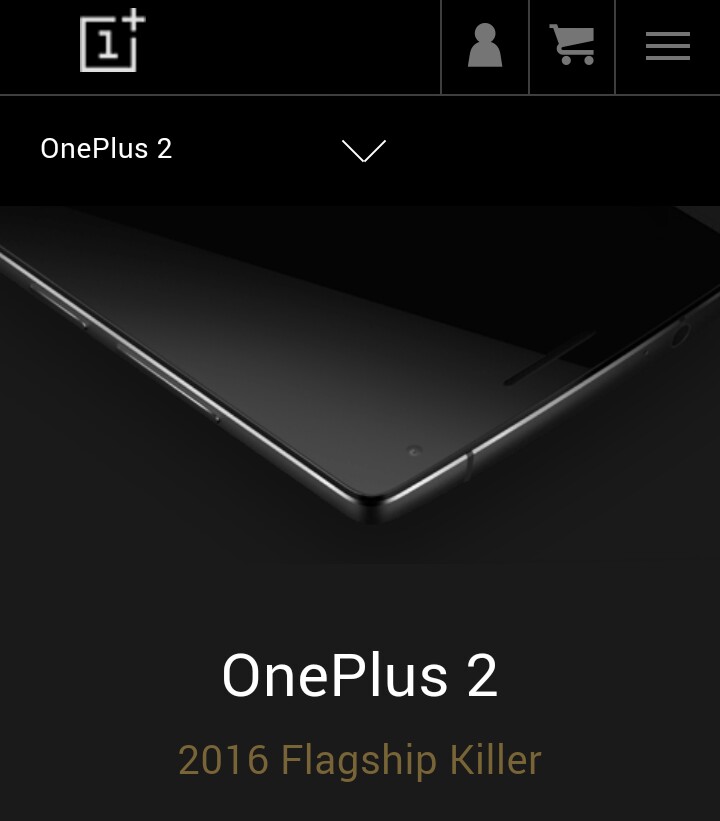
1. The OnePlus 2
2. The Moto G

Read. Then, ask yourself why anyone will spend over a 100k for a flagship when these devices are available at these price points and with these specs? That question, in its very essence is what happens when a true flagship killer is born and experienced for the first time.

For the most part, ignorance plays more than a pivotal role in the continued dominance of a flagship. Those who break their banks for flagships do so from a deep lack of the knowledge of the existence of comparative and inexpensive alternatives. Obviously, there remains the caste who do so, willingly or otherwise, for the class symbol these flagships carry. Definitely. However, knowledge is a defining characteristic in the emerging death of traditional mobile flagship.

Will this emergence hurt Apple's flagship? The jury is still out on that for now. But, can it force Apple to alter anything? Hmm...

Apple won't change their business model for anyone's sentiment. They have become the most valuable company today as a result. It's simple - control the design process and make it premium; control the software and optimise it to the fullest since you also design the hardware; control the pricing and the merchandising since you make both hardware and software; sell at a premium because you control hardware, software and merchandising, all and because you define a status and symbolise class.

With so much power and a compelling catalogue of premium products, you call the shots and no other competing manufacturer can make you sneeze or catch a cold with their attractive device releases. Mostly.

Although Android development has altered some Apple standards going forward like making phones with bigger screens and allowing permissions for some third-party applications that are favourite for smartphone users, Apple remains a stubbornly selfish yet veritable force in mobile tech. And it works for them that way. It doesn't work for their business model to sell cheap. Their iPhone C, which was supposed to have been a cheaper alternative for those who couldn't afford the flagship model, flopped spectacularly. I doubt they'd try it again.

Yet, this mobile tech market isn't entirely predictable. If clamshell phones (what we call flip phones) are making a comeback in 2015, who am I to speculate that Apple wouldn't do another cheap device tomorrow? After all, pressure from Android sales forced Apple's hand and made them enter the mini tablet market though their late visionary founder, Steve Jobs, had earlier labeled that genre of mobile devices dead on arrival.

Who knows? But, there is this certainty. The flagship killers will never be out of job. As far as flagships exist. slowly dying. Windows phones looking like relics. The dregs left for the others to contend with.

Then, phone components became more available and affordable. The tech finally caught up and hardware improved enough to match the processing demands of the software. With its Open Source model, Android grew in leaps and bounds and in some instances overtook Apple in functionality. Apple made do with consistency and premium quality but there came to be a plateauing of growth in what could be offered. The competition was how to better, in slight incremental proportions, what was already on offer.

Concurrently, Android's conditional free OS allowed inexpensive but less-powered devices from Asian OEMs to flood the middle- and lower-income earning market. Those poorly executed products conspired to give the platform a bad reputation with many concluding that Android as a whole was a terrible OS to be involved with. Among other considerations, this led Google to place emphasis on standards and engineer Android to work as efficiently on less-powered as it did with flagships.

What that move birthed was phenomenal especially considering the need for low-priced but efficiently functional devices in many areas around the world, third-world countries inclusive. It triggered the possibility of smartphones priced at under-$50. Coupled with component-availability and affordability, it appeared the days where only the flagship assured of quality and efficiency but at high, out-of-normal-reach premium were numbered.

It appeared. At the time.

Today however, two devices have "appeared" with enough gravitas to stake their holding to that promise. I will allow readers read of the two devices, their quality (which ooze from every pore), the premium-ness, their functionalities, the possibility of personally customising both, their specs, their differentiations but more than anything else their unbelievably affordability for all the mobile-tech punch they pack.

These two
1. The OnePlus 2
2. The Moto G

Read. Then, ask yourself why anyone will spend over a 100k for a flagship when these devices are available for these price points and with these specs? That question, in its very essence is what happens when a true flagship killer is born and experienced for the first time.

For the most part, ignorance plays more than a pivotal role in the continued dominance of a flagship. Those who break their banks for flagships do so for a deep lack of the knowledge of the existence of comparative and inexpensive alternatives. Obviously, there remains the caste who do so, willingly or otherwise, for the class symbol these flagships carry. Definitely. However, knowledge is a defining characteristic in the emerging death of traditional mobile flagship.

Will this emergence hurt Apple's flagship? The jury is still out on that for now. But, can it force Apple to alter anything? Hmm...

Apple won't change their business model for anyone's sentiment. They have become the most valuable company today as a result. It's simple - control the design process and make it premium; control the software and optimise it to the fullest since you also design the hardware; control the pricing and the merchandising since you make both hardware and software; sell at a premium because you control hardware, software and merchandising, all and because you define a status and symbolise class.

With so much power and a compelling catalogue of premium products, you call the shots and no other competing manufacturer can make you sneeze or catch a cold with their attractive device releases. Mostly.

Although Android development has altered some Apple standards going forward like making phones with bigger screens and allowing permissions for some third-party applications that are favourite for smartphone users, Apple remains a stubbornly selfish yet veritable force in mobile tech. And it works for them that way. It doesn't work for their business model to sell cheap. Their iPhone C, which was supposed to have been a cheaper alternative for those who couldn't afford the flagship model, flopped spectacularly. I doubt they'd try it again.

Yet, this mobile tech market isn't entirely predictable. If clamshell phones (what we call flip phones) are making a comeback in 2015, who am I to speculate that Apple wouldn't do another cheap device tomorrow? After all, pressure from Android sales forced Apple's hand and made them enter the mini tablet market though their late visionary founder, Steve Jobs, had earlier labeled that genre of mobile devices dead on arrival.

Who knows? But, there is this certainty. The flagship killers will never be out of job. As far as flagships exist.

Tuesday, December 2, 2014

Tis an Android Life for Me

Are you pro-Apple or a fan of Android? Or, to put it mildly, do you root for the other platforms not part of the hierarchical duopoly in the smartphone leaderboard? Lol...just kidding.

On a serious note, though, many already concede the fact of my bias for all things Android. But, it's a matter of perspective.

I've fought Apple fans for longer than I can fathom but have come to a point where I lay bare my preference for Android with the reasons why and allow whomever wants to embrace it do so, or find their fulfillment in the warmth of other platforms.

What this implies is my love for the Android platform isn't blind or harebrained. It's based on the privileges offered by said platform and factors such as the availability of a wide array of options, customisability, and breakneck innovation. When Apple offers these (not to belittle the revolution Apple Bergson in smartphone tech), it may get a lot more of my attention. But until then, and with Android blazing a trail with the "tear rubber" version 5 of their sweetness "Lollipop" (which several tech bloggers have reluctantly agreed brings Android into the hitherto stronghold of Apple - aesthetically awesome User Experience), it may never get that attention.

It's alright to see this view as "Selective Objectivity", no qualms. It's one perspective and it's appreciated. I'd go with "Informed Choice", but that also will be a perspective. Mine, this time around.

Monday, October 6, 2014

Smartphone Users and "Ringxiety"

Do you sometimes hear you phone ring, vibrate or play that sound you hear when there's a notification yet, when you check, there really was no call nor did you get any notification? There, you're witness to a phantom call/vibration and may have "ringxiety".

Calm those nerves however! It's not fatal. Not yet, at least *winks*

It's a novel area even for those involved in the psychological undertones of the sensation. They explain that unlike generations before who knew never to expect a call when they're out and about because the contraption wasn't mobile nor wireless and was on the table at home or in the office, people in today's increasingly connected and wireless world have become attuned to expect a call at anytime.

This has worked to configure the brain into such an expectant mode where it tries to balance the psychological interpretation of whether or not the sound heard or the vibe felt corresponds to the ringtone or the vibration of an incoming call.

Like in every other aspect of psychological interpretation, there are "hits" and there are "misses"; hits when the interpretation is spot on, and indeed there was a notification waiting for you when you reach for the phone; or misses where it was just a phantom call or vibe. They conclude that more misses are recorded in noisier conditions where the mind has to work extra to differentiate sensations and pinpoint it's origin than in quieter environments, but do not dismiss the "ringxiety" that can still be recorded in quieter places when one is expecting a call or message.

Give yourself a break sometimes and turn that thing off. Use "Airplane Mode" if you prefer. You'd be glad you did. Thank me later.

*phone vibrates* Yo! Catch you later, lemme see who it is.

Wednesday, September 10, 2014

Apple Watch? Thanks, but no thanks.

Of course, I followed the unveiling event in real time online. And to say I was disappointed would be wrong.

As most already know, I'm an Android proselytiser, preaching to any who lends an ear, the benefits Android carries over other platforms especially over iOS, Android most powerful competitor (were you aware of this my position? If not, you now do).

So naturally, the question will be why would saying the Apple Watch was a disappointment be wrong, in effect? It'd mean I was lying. It's really easy to understand why. Allow me explain. Please indulge the length. It was deemed necessary to create a comprehensible background. Thank you.

Apple won itself international acclaim for the luxuriously finesse quality of their design chops. Until recently, no other device manufacturer came close to an Apple product where design was the criteria. None. Right next to it's renown for design, was it's ability to simplify a process into intuitive steps. Sliding, clicking, dragging and navigation (back and forth) on their devices were so easy, children could pick them up and get busy without much help.

Such was the visionary leadership of Steve Jobs that he could produce use-value in his devices that people never knew they needed and when they got it, wondered how they were able to have been living without it. Each iteration of their products, from the laptops to Personal Computers, from the iPods to the iPads and from one version of the iPhone to the next carried with it that premium feel that left those who saw it at the unveiling utterly speechless. It was Apple's inherent W-factor. The WOW-factor.

Then, Jobs died.

His death, couldn't have come at a most inauspicious time. For at the cusp of his passing, there was a new enemy on the horizon. Android. And the rise and rise of the Android army changed the landscape of tech competition and ineluctably signaled the beginning of the end of the W-factor.

I'd not deny Samsung's copying of Apple's "dress sense" in the design DNA of their initial Android devices, since Apple has won in some court rooms using exhibits Samsung couldn't deny, just as I'd not digress into the series of tech Apple relied on (you could also use "copied" here and not be wrong) but quickly patented in designing their iPhone.

However, forced to differentiate, Samsung went back to the drawing board and returned with a vengeance that has seen them trump the iPhone in every market ever since (save maybe America) and seen them displace Apple as the manufacturer with the most smartphone sales.

This Samsung triumph was heralded by the choices made available to users powered by Android. There was a screen size for all types of hands sizes (to each, his or her own) and tastes followed by the choice of storage expansion using memory cards and removable batteries (especially when you run out of power and need to keep your phone chugging on). It didn't stop there as regards choices on Android tho', Samsung was only the biggest fish in the pond. There was LG, Sony, Motorola and finally, of the big 5, there was HTC.

While Samsung danced around plastics (durable polycarbonate plastics tho') and made people who wanted a premium feel to their devices feel cheated, HTC always had the potential to blow away all competition when it came to design. To HTC then went all who cared a little more about how their phone felt in the hand but didn't want an iPhone. Yet, it wasn't until last year's HTC One (M7) did HTC come into it's own rivalling, nay beating, the iPhone at it's game of thrones for the prize of the most quality-feeling phone design. The top awards it won ahead of the iPhone in the design department only bore testimony to the end of the quality wars in Apple's favour.

HTC wasn't done yet and in 2014 bettered the M7 when they outed the HTC One M8. Though a glance was enough to know that there was no other phone on the planet quite like it, a touch of the device was other-worldly. It merely confirmed HTC as the design Kings. Dazall.

Now, as the loss of the W-factor condemned Apple to a lesser-than device manufacturer in the quality department, the pace of software development in Android, spurred by it's Open Source framework, blazed on. Teething problems like bugs, forced closes, freezing and lags across the Android OS shrank away when the hardware developed enough to match the awesome software. A plethora of devices for every price point (for the poor and rich, and everyone in between) no doubt helped to cement Android's leadership of the market segment.

All too suddenly, Apple found itself in an unfamiliar space. The catch-up space. It's premium-ness was now second to HTC and Android had become not only as intuitive but was gaining in widespread acceptance as the go-to device in markets where Apple used to enjoy exclusivity in smartphone experience and sale. Juxtaposed with some Android devices with larger screens, iPhones could almost pass for toyish copies. And Apple's legal battles with almost every other phone manufacturer was making it appear like a sorry loser, an adolescent unhappy with his more successful younger sibling. Worse, it's toyish devices were deemed luxury items cause they comparatively sold at a premium. Too expensive for what could be bought for less.

These pushed Apple to release two devices last year. A "longer" flagship (iPhone 5S) and a regular 5C which so happened to be the iPhone 4 in plastic. Steve Jobs must have recoiled in horror to see his beloved luxurious product in plastic but they had their backs on the wall and that was the response they could muster. The catching up game was catching up. The 5C was meant to be the cheaper version to challenge cheaper Android phones and the 5S was for the topdogs.

The failure of the C is a story of it's own. It's enough here to say that it was such a flop, even Apple was ashamed to be associated with it. So much so that they didn't renew the plastic this year.

But what do we see this year. More catch up. There's a pic-story I shared on my wall comparing the features of the iPhone 6 to my 2012 Nexus 4. #TrueStory but please don't let this prevent you from independent verification of the claims. The iPhone 6 Plus on the other hand improves on a few of those features and seems to be Apple's answer to the Phablets on Android especially the runaway success that is the Note "category" owned totally by Samsung but with a good number of competitors particularly the awesome LG G3, the first Quad Def screen.

So, finally we come to the Apple Watch. What the history above presented carried over to the smartwatch segment as well. Android Wear watches became an item especially this year with Samsung, LG and Asus leading the fray until the Moto 360 joined in as the first and most beautiful of round watch faces (all the others, apart from the LG R watch, have squarish watch faces). The Moto 360 tried to replicate a  wristwatch that is backed with the smarts of Android OS. And my, was it beautiful. (Don't believe. Google it)

The philosophy behind Android Wear (that is, Android for smartwatches) is so simply genius that you'd have thought it was Apple's idea. That is, the old, Steve Jobs' Apple. The irony! It's designed to render information quickly and briefly and to shorten the number of times the user reaches into their pockets or bags to check their phones for notifications. Just as you glance to check the time, you glance to see who's calling, who just sent a text, what appointment are you supposed to meet... in general, what just caused your phone to vibrate or to ring. That way, it's an accompaniment of the phone but for easy access. IT WAS NOT TO BE A SHRUNK ANDROID PHONE, but an accompanying device that makes using the phone only when necessary for the big stuff. Ain't that genius? So, it had just swipe functions, going up or down and heeded to voice actions. So, you could quickly get back to what you were doing especially if you were driving.

But what have we here with the catch up tech company? They who claimed to not have shrunk the computer to the wrist? A full collection of all, or almost all, apps. FOR A WATCH!!!! Colour me disappointed. There are bubbles of different colours for your apps so small, a myopic person will have issues seeing them, saying nothing of those with sausage-sized fingers. Oh, but the crown knob will help you zoom in for better finger use, yea? Yet the knob designer forgot totally that not all their buyers will be right-handed. How about the app bias of the knob functions? Performing zooming in this app and scrolling in another without the user knowing which one applied until use. Then, wait for the best one, and this isn't about the ugly user interface oo. No, though that one sef dey, the watch has varied counter-intuitive interactions: there's TAP, PRESS (with "taptic" feedback), SCROLL (up, down, right, left). How's that for a device that's that small? A device that's supposed to get you stuff done fast and get you going?

If it were a standalone device, needing no other item to function, and handling it all by itself, especially it's health usage (which is quite stellar), then one could snort at my grouses. However, with all these, it still requires to be used as an accompanying device (I'd try not to say catch up again) with the iPhone. If that is so, why try to make it another iPhone but for the wrist and still needing to be tied to the real iPhone? This is a question that may never have risen had Steve Jobs been involved in the design process. But there's no turning back the hands of time now, yea? Yes, pun intended.

I'd try not to say how unmoved I am by the looks of the watch. It's just there given what I've seen of the Samsung GEAR, the LG R Watch, the Asus ZENWATCH and the beautiful Moto 360 (go check them all out and decide for yourself 'cause these devices are all about personal tastes). It doesn't scream Apple like Apple products usually do. It's funny how the iFans who wanted to crucify Samsung for throwing all types of gadgetry into their devices (with large screens oo) are now dancing round the Apple campfire when their watch (with it's tiny screen) cramps all the apps on it. There's not enough space left for me to shake my head.

None of these will affect Apple too much (it would seem I've wasted my time, yes?) They'd sell the phones in millions because it is Apple. Each phone sold will equal two or three of the price of the competition. They'd sell the watches too, at a premium. People, the iSheep, as they're "fondly" known, will spend days lined up in front of Apple stores to be first to own them. Apple stock will go up in due time and make the company the most valuable. As usual.

The duopoly in mobile between the top shots, Android OS and iOS will rage on. I like the competition. It keeps both platforms on their toes, forcing then to innovate and not rest on their oars. The consumers are the happier for it. In the end, I'd still root for Android even though the concessions remain that Apple got this industry going and still remains a point of reference.

Granted, an iFan will take exceptions to certain things here said. The story will differ on several points if told from the other side. That is understandable especially if the facts remain sacred.